
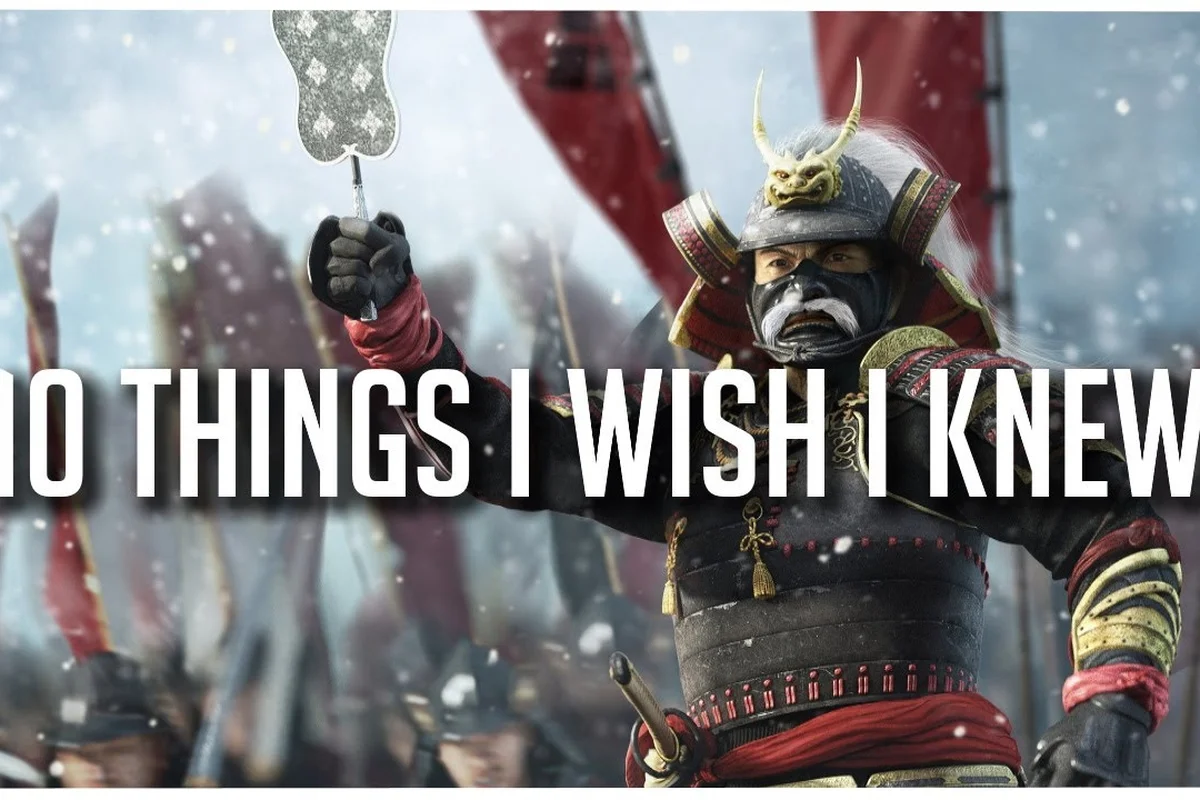
The first ten turns of a Shogun 2 campaign decide the entire war — and most defeats trace back to a sloppy opening rather than a lost battle. Shogun 2 tips and tricks that hold up on Legendary difficulty share one trait: they front-load economy, agents, and a single committed expansion vector instead of reacting to whatever the AI throws at you. This Total War Shogun 2 strategy guide walks through the opening moves proven by veteran players, the agent skill order that compounds across a campaign, and the early expansion path that converts a vulnerable starting province into a snowball by turn 30. The advice below holds whether you start as Oda in Owari, Takeda in Kai, or a vassal clan working toward independence.
Choosing Your Clan and Starting Posture
Clan choice is the single biggest early decision in Shogun 2 because each faction changes the economy math, the unit roster, and the diplomatic map before turn 1. Oda fields the strongest ashigaru line in the base game, which means cheaper stacks and faster replenishment, while Takeda's cavalry bonus in Kai tilts the early game toward shock tactics and rapid province capture. Tokugawa begins in Mikawa as a vassal of the Imagawa, so the first ten turns lean on diplomacy, rebellion timing, and high-tier ninja/metsuke training rather than open-field battles. Hojo in Izu and Sagami is the classic castle builder path: slow expansion, tall economy, and devastating siege defenses once the walls go up. Uesugi in Echizo leans on Buddhist temple income and monk units that trade melee power for morale shock against ashigaru lines.
Faction Bonuses at a Glance
| Clan | Starting Province | Military Bonus | Economic Bonus | Best Opening Style |
|---|---|---|---|---|
| Oda | Owari | +ashigaru melee damage | Trade income | Aggressive neighbor wars |
| Takeda | Kai | +cavalry charge | Mountain mine income | Fast cavalry snipes |
| Tokugawa | Mikawa (vassal) | +ninja/metsuke | Diplomatic traits | Independence, then ambush |
| Hojo | Izu/Sagami | +siege defense | Coastal trade | Turtle, then strike |
| Uesugi | Echigo | +monk units | Temple income | Holy war expansion |
| Mori | Chugoku (DLC) | +naval boarding | Pirate trade | Island-hopping conquest |
Picking a faction that matches your playstyle is the most important of all Shogun 2 tips and tricks because the AI responds to your faction bonus. Aggressive clans draw coalition wars early, defensive clans buy time for the economy to mature, and vassal clans must manage rebellion timing on top of expansion. The base game promotes more than fifty minor factions to playable status in the current release, so this roster is no longer the ceiling it once was on the original 2011 launch.
Picking a Difficulty That Teaches
Hard mode is the recommended training difficulty for learning the opening, because the AI keeps its bonuses but you avoid the Legendary handicaps that punish every mistake. Once the first ten turns feel automatic, Hard/Very Hard provides the right balance of challenge and forgiveness, and Legendary is the real test of the entire Shogun 2 strategy guide stack. If you are returning after years away, the modernized Complete Edition on Steam reworks lighting, scales the interface for 1440p and 4K displays, and adds full Japanese and Chinese voice acting that makes the opening cutscenes much easier to follow.
Shogun 2 First Ten Turns: The Opening Economy
The economy is what wins Shogun 2 campaigns, and the economy is decided in the first ten turns. Most defeats in this game trace back to a province that had to choose between a market and a temple and chose wrong, then bled income for the rest of the campaign. The opening economy follows a strict order: secure the castle town chain, build a single market in the highest-growth province, then queue replenishment and a second military building only after the market is online. The temptation is to rush military recruitment the moment the first stack finishes, but a level-1 market in a province with fertile land pays for itself in roughly four to six turns, which is the same window your first army needs to recruit anyway.
Opening Building Order
| Turn | Province Action | Reason |
|---|---|---|
| 1 | Upgrade castle town if possible | Adds slot, raises garrison |
| 2 | Build market in capital | Stable income stream |
| 3 | Recruit first full stack | Defend against neighbor war |
| 4 | Build roads to neighbor | Faster army movement |
| 5 | Build shrine/temple chain | Replenishment + public order |
| 6 | Recruit agents (metsuke first) | Unlock tax/octroi discounts |
| 7 | Annex or attack weakest neighbor | First expansion target |
| 8 | Build second market in new province | Lock in trade route |
| 9 | Train second army if safe | Pressure second front |
| 10 | Evaluate diplomacy | Trade agreements, non-aggression |
This order is conservative by design, and it is the same skeleton players on the r/Shogun2 community lean on for legendary runs. The order shifts slightly by faction: Takeda can skip the second market and rush cavalry recruitment, Hojo can delay the second army and prioritize castle upgrades, and Tokugawa should pour metsuke and ninja experience into tax reduction before declaring independence.
Income Levers You Can Pull Early
The three income levers that matter before turn 20 are taxation (raised by metsuke with the right skill), trade agreements (signed with the largest AI faction you do not plan to attack soon), and octroi rights (a metsuke-sold building chain in castle towns). A trained metsuke with two points in the right skill tree can lift a province's income by 200-400 koku per turn, which is roughly the upkeep of one mid-tier unit, so the early metsuke investment pays for itself before turn 15. A complementary primer on the same logic lives in the Shogun 2 agent leveling guide at this site, which covers which agent skills compound fastest and when to start a second agent of the same type.
Agent Usage and Skill Order
Agents are the silent economy of Shogun 2. A ninja with a high sabotage skill can shut down an enemy castle's wall chain for a turn, a metsuke with high charm unlocks tax bonuses that compound across every province you own, and a monk trained into inspire turns a single ashigaru unit into a morale monster on the battlefield. The mistake most new players make is treating agents like scouts and leaving them in the army. The better play is to leave one ninja in the capital to guard against enemy agents, send the second ninja into enemy territory to scout and sabotage, and station a metsuke in the highest-growth province to farm tax skills.
Agent Build Priorities by Faction
| Faction | First Agent | Priority Skills | Why |
|---|---|---|---|
| Oda | Metsuke | Charm → Repress | Tax and public order |
| Takeda | Ninja | Sabotage → Scout | Shut enemy castles, spot ambushes |
| Tokugawa | Metsuke + Ninja | Charm + Sabotage | Independence timing requires both |
| Hojo | Metsuke | Charm → Authorize | Tall economy needs max tax |
| Uesugi | Monk | Inspire → Piety | Morale wins battles, temple income funds war |
The general rule is: if your faction has a strong army, push the agent that lifts the economy (metsuke). If your faction relies on trickery and timing (Tokugawa, Date), push the agent that disrupts the enemy (ninja). If your faction wins slow wars of attrition (Uesugi, Ikko Ikki clans from the DLC), the monk's inspire skill turns low-tier units into mid-tier threats. The cross-faction logic and which agent levels to push first is the same question every long campaign asks, and it is one of the Shogun 2 tips and tricks that compounds the most across a playthrough.
Ninja as Offensive Weapon
Ninjas at high level are not just spies. A master ninja with the right skills can assassinate enemy generals, sabotage multiple buildings in a single turn, and act as a forward scout that spots ambushes before your army walks into them. The first ten turns are the right window to send a ninja across the map toward a future target province, because most AI factions leave their agents in the capital early and your ninja will arrive with little resistance. By turn 20, the AI has spread its own agents out, and the same mission becomes a coin flip.
Opening Expansion: The First War
The first war is the most important war of the entire campaign. Win it cheaply and you snowball into a top-three power by turn 30; lose it and the AI coalitions form against you before your second stack is online. The opening target should be the weakest neighbor that owns a province with either fertile land, a coastal trade port, or a road connection to your next two targets. The reason coastal trade ports matter is the trading port building chain, which adds a flat income bonus to every adjacent province and pays back its cost in roughly 10 turns.
Target Selection Matrix
| Province Type | Expansion Priority | Reason |
|---|---|---|
| Fertile land, no port | Medium | Food, growth, public order |
| Coastal with port | High | Trade income multiplies |
| Mountain province | Low | Hard to assault, low growth |
| Province with Buddhist temple | High | Religion bonuses if razed |
| Province with master smith | Medium | Recruit unique weapon units |
Once the target is picked, the opening move is to bring your full stack to the border on turn 1, march into the province on turn 2, and lay siege to the castle on turn 3. Sieging with the siege attacker stance is faster but costs more men, while standing outside in the raid stance drains the garrison's food and forces a sally. For a deeper look at the opening war, including how to handle a defensive castle assault and when to fight a field battle instead, the Shogun 2 battle tactics companion piece covers the combat-side decision tree in detail.
Managing Two-Front Risk
The single most common opening mistake is taking a second war before the first is finished. The AI reads your army's location and its nearest neighbor often declares war the turn your stack leaves the capital. The fix is diplomatic: a non-aggression pact or trade agreement with the second neighbor buys four to eight turns of safety, and during that window you finish the first war, consolidate the new province, and station a garrison army in the capital before declaring on the second target. The diplomatic screen is therefore part of the Shogun 2 opening moves checklist, not a side activity you finish at the end of turn 10.
Early Expansion Beyond Turn 20
Once the first war ends and a second province is in hand, the campaign shifts from survival to momentum. The next ten turns should consolidate the new province, build a second market chain, and recruit a second army that can pressure the second target. This is also the window when the first agent should be promoted, the first monk should be deployed, and the first decision about religion (Buddhist vs. Christian vs. traditional) should be made. The religion choice affects which buildings are available, which agents can be recruited cheaply, and which trade partners the AI will accept deals with.
Turn 20-40 Priorities
| Priority | Action | Reason |
|---|---|---|
| 1 | Upgrade castle in new province | Raise garrison, add slot |
| 2 | Build market in new province | Lock in trade income |
| 3 | Recruit second stack | Open second front |
| 4 | Train second metsuke | Double tax bonus |
| 5 | Decide religion | Unlock building chains |
| 6 | Scout future target with ninja | Spot ambushes, sabotage walls |
| 7 | Send emissary to far clan | Long-term alliance against coalition |
| 8 | Build road to next target | Faster movement, less attrition |
The religion decision is one of those choices that does not feel urgent in the moment but compounds for the rest of the campaign. Buddhist temple chains are the best general-purpose money makers and pair well with monk units. Christian churches unlock matchlock units earlier and open trade with European-aligned factions, which can be decisive on island-hopping or naval campaigns. Traditional Shinto shrines give the strongest public order bonuses and are the safest pick if your starting province is unstable.
The Kyoto Question
The mid-game goal in every Shogun 2 campaign is Kyoto, because the faction that holds Kyoto gains a stacked honor and income bonus that turns a top-five power into a runaway leader. The march on Kyoto is therefore not a late-game decision but an early-game plan: every expansion target from turn 10 onward should be evaluated for whether it shortens the path to Kyoto, and every diplomatic agreement should be evaluated for whether the partner controls a province on that path. A common veteran pattern is to push toward Kyoto by turn 60-80 with three full stacks, then hold the city against the inevitable coalition. The clan-fame and Kyoto-strategy details live in the Shogun 2 clan fame guide at this site, which goes deeper on the mid-game timing and the agent stack needed to defend the capital.
Avoiding the Bankruptcy Spiral
Bankruptcy is the second most common campaign-ender after a lost opening war, and it almost always starts in the turn 15-30 window. The trigger is over-recruitment: a second or third army that the economy cannot sustain, followed by a province that loses public order and stops paying taxes, followed by a forced disband that exposes the capital. The fix is a hard rule: never recruit a second full stack until the first market chain is online and the first metsuke has the charm skill. A complementary rule covers castle defense: the garrison building chain is cheaper than a field army and handles the AI's first wave while the field army is on campaign.
Upkeep Tiers and Their Triggers
| Army Tier | Units | Approx Upkeep (koku) | When Affordable |
|---|---|---|---|
| Tier 1 | 6 ashigaru, 2 yari samurai, 2 archers | ~600-800 | Turn 1-15 |
| Tier 2 | +1 cavalry, +1 monk, swap yari for naginata | ~1100-1400 | Turn 15-30 |
| Tier 3 | Full samurai, matchlock units, general | ~1800-2200 | Turn 30+ |
| Navy stack | 4-6 ships | ~500-900 | When trade income stable |
The economy math is the same one the Shogun 2 economy primer walks through in more detail, and it is the single biggest gap between a campaign that snowballs and one that flatlines. The veteran rule of thumb is: if you cannot describe how you will pay for the new army in the next eight turns, do not recruit it. The same logic covers agent upkeep: a high-level metsuke or ninja is a meaningful per-turn cost, and the player who runs four master agents before turn 40 will be broke before turn 50.
Manual Battles vs. Auto-Resolve
The auto-resolve in Shogun 2 is conservative, meaning it tends to under-report your chances in a winning fight and over-report your chances in a losing one. The rule of thumb is to fight manually whenever the auto-resolve predicts anything below a decisive victory, because a close victory that auto-resolves into a pyrrhic win still costs you 30-50% of the stack, and that attrition is what triggers the bankruptcy spiral. For a deeper look at the auto-resolve math and when manual play is mandatory, the Shogun 2 difficulty and defense primer covers the trade-off with concrete examples.
Frequently Asked Questions
What is the easiest clan for a first Shogun 2 campaign?
Oda is widely considered the easiest starting clan because Owari's fertile land and the +ashigaru bonus give a forgiving economy and a flexible army roster. Tokugawa is harder because of the vassal status, but it teaches the agent and diplomacy mechanics that the rest of the game rewards. Hojo is the easiest defensive start, because Izu and Sagami sit in a corner and only one neighbor can realistically threaten the capital in the first 30 turns.
How long does a Shogun 2 campaign take?
A short campaign on Normal difficulty typically runs 30-40 in-game years, which translates to roughly 8-12 hours of play. A long campaign on Legendary mode with a slower faction can run 60-80 in-game years and 25-40 hours, because the AI gets more aggressive and the expansion windows are narrower. The first 30 turns are the densest learning curve; the back half of a long campaign is mostly executing the strategy you set up in the opening.
Can you win a Shogun 2 campaign without ever fighting a siege?
Technically yes, because you can capture a province by occupying the castle town rather than assaulting the castle, but the cost is leaving a hostile garrison behind you. The cleaner path is to assault the castle with a stack that includes siege specialists (matchlock units, monks, or a general with the siege trait), and to do it in the first 20 turns of the war before the enemy can reinforce. Manual play in a siege is the single biggest source of army casualties, which is why veteran players push ninja sabotage to soften the walls before the assault.
Is Shogun 2 still worth playing in 2026?
Yes, and arguably more than at launch, because the Complete Edition reworks the interface for modern hardware, the active mod community still releases balance and unit packs, and the Legendary AI remains one of the most punishing in the Total War series. The base game is also the cleanest entry point in the franchise for new players, because the smaller faction roster and the focused Sengoku setting are easier to learn than the modern-era entries. If you are returning after years away, the campaign pacing has not changed, but the modernized visuals make the opening battles much more readable.