
DLC
Every Total War: SHOGUN 2 expansion, clan pack and unit pack in the Complete Edition — Rise of the Samurai, Fall of the Samurai, Ikko-Ikki, Otomo and Hattori.
Introduction
The Complete Edition bundles the 2011 base game with every expansion campaign, clan pack and unit pack released for it, then rebuilds the whole package for modern hardware. The two expansion campaigns stretch the timeline in opposite directions. Rise of the Samurai steps back to the Genpei War and the founding of the first shogunate, replacing samurai armies with a different unit structure built around levy troops and retainers. Fall of the Samurai jumps forward to 1864, where imperial and shogunate domains fight with rifles, railways, ironclads and foreign advisers. Between them sit three clan packs that add the Hattori, the Ikko-Ikki and the Christian Otomo, plus unit packs that expand the roster for campaign and multiplayer armies alike.
Complete Edition Content Reference
| Content | Type | What It Adds |
|---|---|---|
| Rise of the Samurai | Campaign | Genpei War setting, six legendary clans, levy-based unit structure |
| Fall of the Samurai | Campaign | 1864 Boshin War, imperial and shogunate clans, railways and ironclads |
| Ikko-Ikki Clan Pack | Faction | Warrior monk clan with a religious tech tree and eight unit variants |
| Otomo Clan Pack | Faction | Christian clan with altered research and early Portuguese firearms |
| Hattori Clan Pack | Faction | Ninja-focused clan with battlefield-deployable kisho ninja |
| Saints and Heroes Unit Pack | Units | Nine hero units that anchor a line and inspire nearby troops |
| Sengoku Jidai Unit Pack | Units | Ten elite units usable in campaign and multiplayer armies |
| Blood Pack | Cosmetic | Optional gore effects and matching audio, switchable in the options menu |
Content Breakdown
Rise of the Samurai
The Genpei War campaign, set four centuries before the base game and played under a different military system.
Fall of the Samurai
A standalone 1864 campaign where rifles, railways and foreign powers meet traditional samurai formations.
Ikko-Ikki Clan Pack
A warrior monk faction with its own religious technology tree and no conventional daimyo court.
Otomo Clan Pack
The Christian clan, with an altered research tree and early access to Portuguese firearm units.
Hattori Clan Pack
The ninja clan, with battlefield-deployable kisho ninja and the Battle of Nagashino scenario.
Saints and Heroes Unit Pack
Nine hero units that anchor a battle line and inspire the troops standing beside them.
Sengoku Jidai Unit Pack
Ten elite units that slot into both campaign armies and multiplayer builds.
Blood Pack
Optional gore effects and matching audio, switchable from the options menu.
Core Mechanics
Each expansion is effectively a separate campaign with its own map, unit roster and economy, so progress and unlocks do not carry between them. Rise of the Samurai replaces the samurai-and-ashigaru structure with levy and retainer units, which flattens the quality gap between cheap and expensive troops and shifts battles toward numbers and positioning. Fall of the Samurai goes the other way, adding long-range artillery, gunpowder infantry and naval bombardment that can influence land battles fought near the coast. The clan packs modify the base campaign rather than replacing it: Ikko-Ikki and Otomo add their own religious research paths, while Hattori adds battlefield deployment rules for elite infantry. Unit packs sit on top of all of it, slotting additional units into any roster that can afford their upkeep.
Advantages
The Complete Edition delivers a large amount of distinct content for a single purchase, and the expansions are genuinely different games rather than campaign reskins. Rise of the Samurai suits players who dislike the samurai-versus-ashigaru power gap, while Fall of the Samurai is the right entry point for anyone who prefers gunpowder warfare and industrial escalation. The clan packs add asymmetric faction design that the base twelve do not cover: Ikko-Ikki plays a religious conversion game, Otomo a gunpowder-and-conversion game, and Hattori a positional and intelligence game. Together with the fifty-plus minor clans unlocked by the Complete Edition, the result is a roster of starting positions large enough that two campaigns rarely feel alike.
Challenges & Weaknesses
The expansions are self-contained, which means none of the progress, units or research you unlock in one carries into another. That makes each one a fresh start rather than a continuation, and it means the base campaign advice on this wiki does not transfer to Rise of the Samurai or Fall of the Samurai without modification. Clan packs vary in how much they actually add: a faction pack changes the campaign considerably, while a unit pack only widens the roster without changing how a campaign plays. Some content is cosmetic, and hero units in particular are expensive enough that they are situational rather than automatic inclusions in an army list.
Frequently Asked Questions
What is included in the Complete Edition?+
Should I play Fall of the Samurai before the base campaign?+
Are the clan packs worth it?+
Does DLC content carry over between campaigns?+
Quick Tips
Treat Rise of the Samurai and Fall of the Samurai as separate games rather than extensions. Both have their own unit rosters, economies and technology structures, so advice built around ashigaru spear walls or the Bushido arts does not transfer directly. Read the campaign's own unit list before committing to a build order, and expect the levy-based Genpei roster to behave very differently from the gunpowder armies of the Boshin War.
Play Fall of the Samurai if you prefer ranged warfare. Firearms dominate every engagement, artillery ranges are far longer than in the base game, and naval bombardment can influence land battles fought near the coast. Traditional melee units still matter when you assault a defended castle, so keep an infantry core even in a modern army rather than relying entirely on rifle and artillery lines.
Use the clan packs to play a campaign that breaks the base game's assumptions. Ikko-Ikki and Otomo both come with altered research trees, and their religious strategies create unrest in neighbouring provinces that no base clan can replicate. If you have finished several Sengoku campaigns with the major clans, an asymmetric faction is a more interesting change than a higher difficulty setting.
Be careful with hero units from the unit packs. They are powerful anchors and their presence improves the morale of nearby troops, but their upkeep is high enough that fielding several will strain an army budget that would otherwise support more line infantry. One or two in a stack is usually the right number; a full army of them is expensive and fragile at the same time.
Featured
Total War: SHOGUN 2 Fall of the Samurai Technology Guide
Master this Fall of the Samurai technology guide covering imperial versus shogunate reforms, railway research, and the fastest Boshin War tech order.
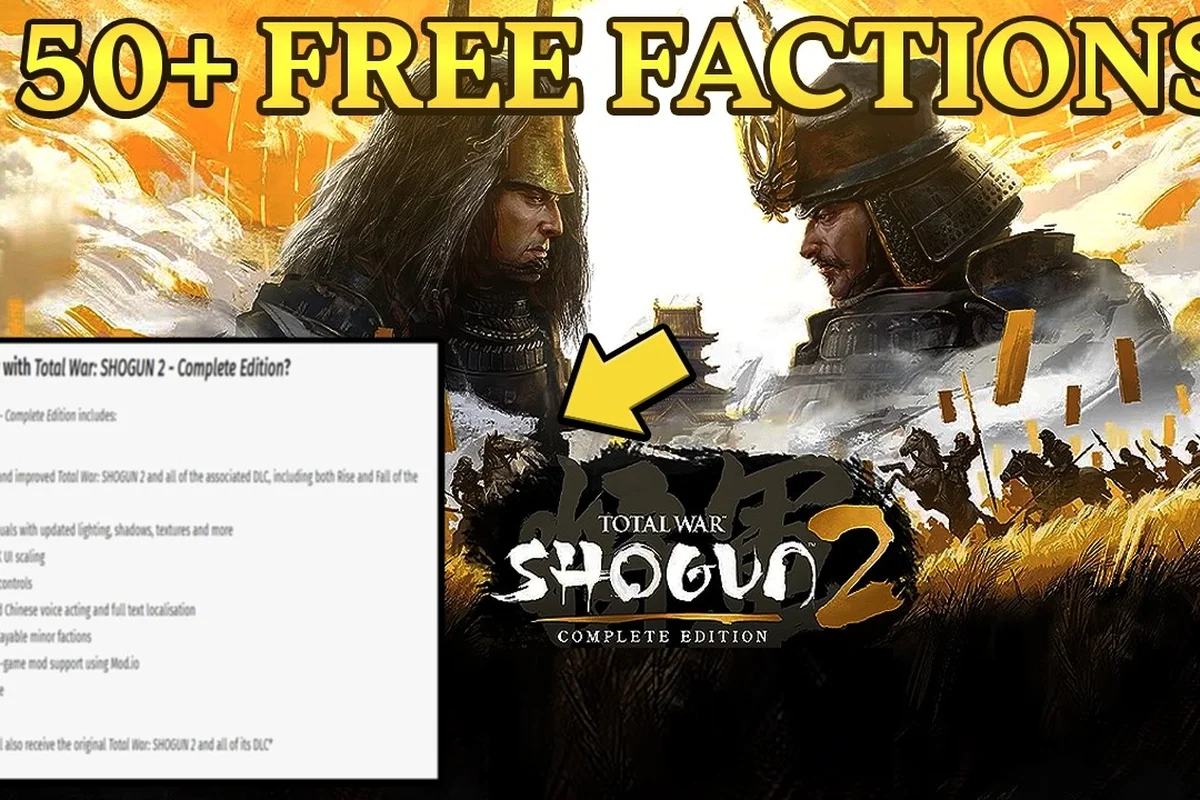
Total War: SHOGUN 2 Complete Edition New Voice Acting
Hear what the Shogun 2 Complete Edition new voice acting actually changes — re-recorded lines, refreshed audio, and how the rebuild shapes Sengoku immersion.
Total War: SHOGUN 2 DLC Order to Play: Best Starting Pack
Find the ideal Shogun 2 DLC order to play, Complete Edition pricing, upgrade discounts, and platform support so you know which pack to install first.
All Articles
Total War: SHOGUN 2 Rise of the Samurai Review & Verdict
A hands-on Shogun 2 Rise of the Samurai review covering Genpei War factions, standout units, campaign length, and Complete Edition value.
Total War: SHOGUN 2 Saga Faction Pack Guide: Obama, Tsu & Sendai
Break down the Shogun 2 Saga faction pack guide, with Obama, Tsu, and Sendai faction traits plus the Dragon War Battle Pack and historical battles DLC.
Total War: SHOGUN 2 DLC List: Every Pack Explained
Browse the full Total War Shogun 2 DLC list, from clan and unit packs to campaign expansions, with pricing and which packs are worth buying.

Total War: SHOGUN 2 Otomo Clan Pack: Units & Heroes
Explore the Shogun 2 Otomo clan pack guide: matchlock Christian roster, Saints and Heroes unit pack, and the Battle of Nagashino and Kawagoe scenarios.