
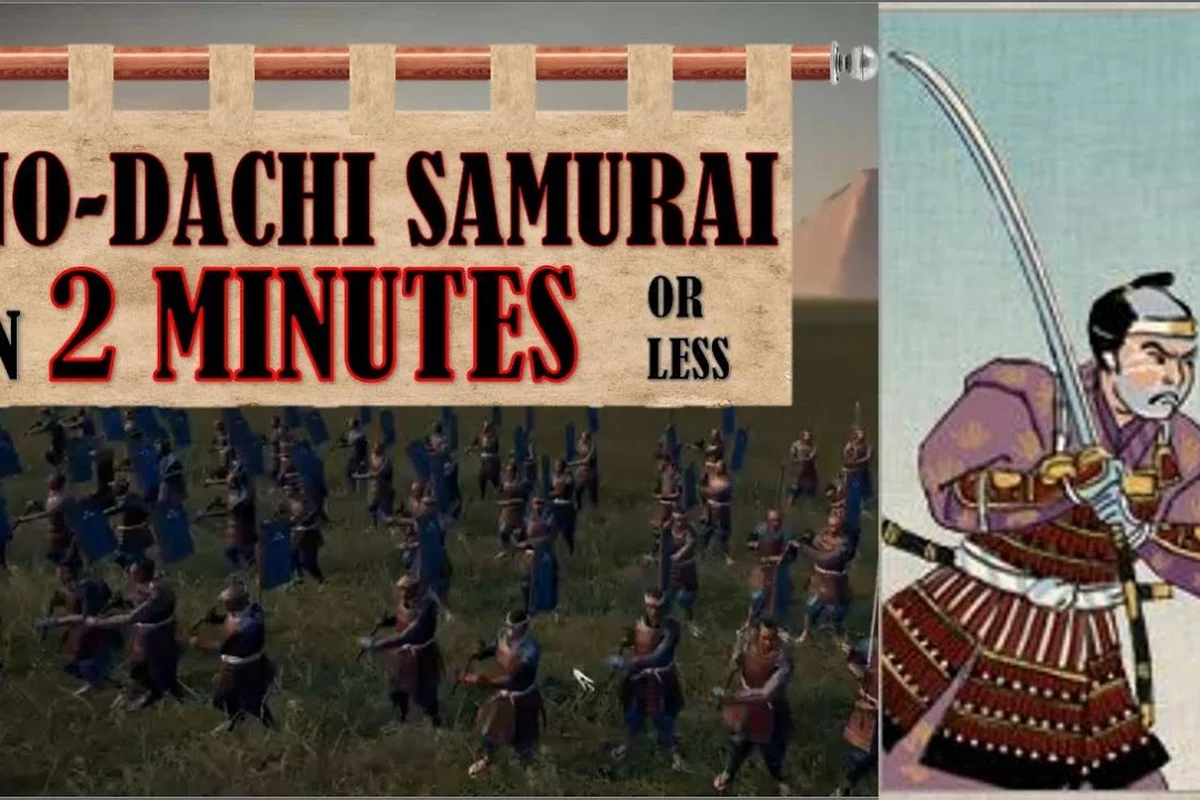
Katana-armed samurai are the elite shock infantry of feudal Japan in Total War: SHOGUN 2, and understanding how they fight is the difference between winning a melee grind and watching a line collapse. The katana is a curved, single-edged sword designed to slash through unarmored flesh, and in game terms that translates into a weapon that is fast, accurate in melee, and devastating against routing enemies — but also brittle against braced polearms. This guide walks through every facet of Shogun 2 katana samurai, from the buildings you need to recruit them to the formations, matchups, and army compositions where they truly shine.
Katana Samurai Overview and Core Identity
The Shogun 2 katana samurai are mid-to-high tier melee infantry that occupy the role of "duelist shock troops." They are not line holders. They are killers — units that you cycle in once a gap opens, that you cycle out before they bog down in a protracted engagement, and that you keep near a general so their morale stays locked. Compared with ashigaru, katana samurai have noticeably higher Melee Attack, Melee Damage, and Base Morale, but they are also more expensive to recruit and maintain.
The two non-DLC katana samurai variants most players encounter are the Katana Samurai (mid-tier, available once the appropriate building is constructed) and the No Dachi Samurai (a heavier two-handed variant that trades a small amount of speed for armor-piercing damage). Both share the same recruitment tree and similar tactics, but the No Dachi leans further into anti-armor work, while the regular Katana is the cleaner duelist.
| Attribute | Katana Samurai | No Dachi Samurai | Yari Samurai (comparison) |
|---|---|---|---|
| Primary weapon | Katana (slash, fast) | No Dachi (slash, slow) | Yari (pierce, braced) |
| Recruitment tier | Mid (requires castle) | Mid (requires castle) | Mid (requires castle) |
| Melee Attack | High | High | Medium |
| Melee Damage | High | Very High | Medium |
| Base Morale | High | High | High |
| Armor | Medium | High | Medium |
| Cost per turn (upkeep) | High | High | High |
| Best use | Cycle-charges, flanks | Anti-armor, single-elite | Holding a line, anti-cavalry |
A common mistake new players make is treating katana samurai as a frontline. They are not. A braced yari wall will grind them down through sheer Defense and Bonus vs. Cavalry stats. Instead, think of katana samurai as a scalpel: keep them behind your ashigaru screen, then commit them to whichever flank is buckling.
The recruitment path also matters. According to the How To Build Your ARMY - Army Composition Guide - Total War: Shogun 2, the original 2011 release ships eight playable clans plus a tutorial clan, and most of those factions can field katana samurai after upgrading a province to a castle with the right military building chain. The exact building differs by clan — for example, a Chosokabe player researching the swordsmith art line will see katana samurai unlock earlier than a Date player focused on cavalry — but the underlying stat profile is shared.
How Katana Combat Differs from Spear Combat
SHOGUN 2's melee system rewards three things: charge momentum, the Stamina bar, and the Bonus vs. Infantry/Cavalry tag on each weapon. The katana has no defensive bonus the way the yari does. Instead, it gets a higher base Melee Attack and a faster swing cycle, which means katana samurai rack up kills quickly against an enemy that is already wavering.
The yari, by contrast, has a built-in Brace stance (activated by holding position behind an enemy charge) and a damage bonus against cavalry. That is why Shogun 2 yari samurai are typically your anchor: they stand still, they punish charges, and they trade their mobility for raw defensive output. Katana samurai do the opposite — they move, they flank, and they exploit the morale crash that yari lines create in routing enemies.
This complementarity is the heart of any good SHOGUN 2 army. You use yari to fix the enemy in place, and you use katana to roll up the exposed flank. If you try to use only one of those tools, the battle usually turns into a coin flip.
The No Dachi Variant and When to Field It
The Shogun 2 no dachi samurai are a more specialized unit. They wield a long-handled katana, and in game terms they pay for it with a slightly longer swing animation in exchange for significantly higher Armor Piercing Damage. That makes them the right pick when your opponent is running heavy cavalry, another katana unit, or matchlock-armed samurai. Against a screen of bow ashigaru, however, the regular Katana Samurai is the more efficient choice because the no dachi's slower swing rate means fewer kills per second.
Players also report — per community testing on the Steam Workshop and the Total War Center forums — that no dachi samurai synergize well with a general who has the Inspire skill, because the extra melee boost compounds with the no dachi's already high base damage. That is not a guarantee; it is observation from veteran players running these units in legendary difficulty campaign runs.
Recruitment Buildings, Tech, and the Path to a Katana Stack
SHOGUN 2 splits the unit roster into ashigaru and samurai, with the latter requiring specific province buildings before training is possible. The campaign layer is what gates your access to katana samurai, and skipping that layer is a common reason new players find themselves locked out of their preferred army comp.
The Castle Building Tree
The katana samurai are unlocked by upgrading a province to a Castle and then constructing a specific military building inside it. Different clans have access to different samurai building chains — for example, Shimazu-leaning players get a stronger katana variant earlier because Shimazu's unique unit roster already leans into melee — but the gating principle is shared across factions.
| Building tier | What it unlocks | Notes |
|---|---|---|
| Town (starter) | Nothing elite | Recruits ashigaru only |
| Castle (tier 2) | First samurai unit (often yari or bow) | Requires the Castle building tech |
| Specialized castle buildings | Katana Samurai, No Dachi Samurai, Matchlock Samurai | Requires further arts research |
| High-tier arts (Bushido) | Improved variants with better stats | Long campaign commitment |
The Shogun 2 bow samurai are also gated behind a similar castle building, so it is usually efficient to build one castle that supports your ranged needs and another that supports your melee needs. Spreading samurai production across two provinces is often better than concentrating it, because a single besieged castle can take your entire elite roster out of the fight.
The relationship between castle buildings and unit unlocks is covered in more detail in our Shogun 2 castle technology guide, which walks through the Bushido and Shinobi art trees and the order in which they should be researched for a samurai-heavy campaign.
Bushido vs. Shinobi: Which Art Tree First
SHOGUN 2 uses a mastery-of-the-arts system with two branches: Bushido (military reform) and Shinobi (espionage and stealth). For a player whose goal is to field a strong katana samurai army, Bushido is the obvious first pick — it directly buffs melee attack, melee damage, and unit morale. Shinobi is the right second pick once you have the elite units you need and want to fund the espionage actions that disable enemy agents.
According to the Wikipedia entry on Total War: SHOGUN 2, the technology tree is split into Bushido for military reforms and the complementary art line for non-military bonuses, and the campaign pacing rewards committing to one branch before opening the other. If you split research too early, you delay both your elite units and your agents.
Cost vs. Value: When to Hire a Katana Unit
The upkeep on katana samurai is roughly 2-3× the upkeep of a comparable ashigaru unit. That cost is justified in two situations: when the enemy is fielding their own elite units that ashigaru cannot reliably defeat, and when the map geography allows you to flank (a tight siege map with one chokepoint is a bad place for katana; an open field battle with two distinct wings is ideal).
In early campaign turns, most players are better served by fielding a full ashigaru stack and only hiring 2-4 katana samurai as a hammer. Replacing ashigaru entirely with samurai before your income supports it will bankrupt your clan within a few turns, because ashigaru also have the lowest recruitment cost and can be replenished quickly after a loss.
Combat Mechanics: Duel, Morale, and the Melee Triangle
The katana is part of a three-way melee triangle in SHOGUN 2. Each weapon class has a soft counter and a hard counter, and recognizing where your katana unit sits in that triangle is what separates a winning army comp from a frustrating one.
The Melee Triangle at a Glance
| Attacker ↓ / Defender → | Yari (braced) | Katana (melee) | No Dachi (heavy melee) |
|---|---|---|---|
| Yari Samurai | Stalemate | Loses slowly | Loses slowly |
| Katana Samurai | Loses if frontal, wins on flank | Stalemate | Loses slowly |
| No Dachi Samurai | Loses if frontal, wins on flank | Wins on flank | Stalemate |
| Bow Samurai (ranged) | Wins at range | Wins at range | Wins at range |
| Cavalry | Loses to brace | Wins rear charge | Loses to brace |
The key insight is that braced yari beat katana head-on, but katana beat yari on the flank. This is why position matters more than raw stats. A katana unit that walks straight into a yari wall will grind. A katana unit that hits the side of the same wall while it is engaged with your ashigaru will roll it.
SHOGUN 2 also models stamina in melee. A unit that has been swinging for 30 seconds without a break has noticeably lower Melee Attack than a fresh unit. Katana units burn stamina faster than yari units because of their faster swing rate, which means you should plan to cycle them out after 20-30 seconds of sustained melee. Pulling a katana unit back to your general for a few seconds lets stamina regenerate, and that single trick is responsible for a large number of "how did that katana unit kill 200 men" replays on community sites.
Morale and the "Routing Kill" Mechanic
The katana's signature trait is its lethality against routing enemies. When a unit breaks and starts to flee, katana samurai can chase them down and rack up kills at an extraordinary rate. The route-kill bonus is so strong that veteran players often use a single katana unit as a "sweeper" — they hold it in reserve until the enemy line breaks, then send it in to convert a marginal win into a decisive one.
The flip side is that katana units are not as resilient under fire. They have decent armor but not heavy armor, and a volley from bow samurai or ashigaru archers will chip their morale quickly if they are standing in the open. Always have something to soak arrows for your katana unit — either a yari screen in front, a forest tile that blocks line of sight, or a smoke screen from a matchlock unit firing into the same volley arc.
General Skills That Buff Katana Samurai
The general in a SHOGUN 2 army is not a hero unit in the modern Total War sense, but he functions as a critical force multiplier whose presence can shift a katana samurai stack from a coin-efficient trade unit into a battle-winning anchor. Because katana samurai rely on sustained melee pressure to leverage their high melee attack and armor, the general's aura skills compound with their base stats rather than replacing them, meaning a well-leveled general recruits and ranks up faster when planted beside a katana frontline than one idling in a back province.
-
Inspire — flat morale buff to nearby units
-
Duel — gives the general a personal edge, freeing him to engage enemy agents without dying
-
Melee Attack boosts (Bushido tradition) — additive with the unit's base stats
-
Authority — higher authority general maintains control over a wider map area and reduces rebellion
A general with Inspire +3 parked next to your katana samurai will noticeably extend the time those units can stay in melee before routing. This is most visible in multiplayer, where experienced players duel for control of a single hill and the army with the better-positioned general usually wins the engagement.
Bow Samurai, Warrior Monks, and Kisho Ninja: The Supporting Cast
A pure katana stack is fragile. To make it work in campaign and multiplayer, you need ranged support, a morale anchor, and a utility piece. The three units that pair best with katana samurai are bow samurai, warrior monks, and kisho ninja.
Shogun 2 Bow Samurai as the Ranged Anchor
The Shogun 2 bow samurai are the elite archer unit, and they sit one tier above bow ashigaru in both damage and accuracy. They are expensive to recruit and to maintain, but they bring three things the cheaper units cannot match: higher Range, higher Base Morale, and the ability to fire while moving for short periods. That last trait is what makes them so dangerous in the hands of a player who knows how to micro.
A typical Shogun 2 katana samurai-anchored ranged comp, built around the bow samurai described above, looks like this in practice, with each stack sized to fit inside a 20-unit army cap and the bow samurai held behind the yari screen rather than on a flank:
| Unit role | Unit | Number in stack (20-unit army) |
|---|---|---|
| Yari anchor | Yari Samurai or Yari Ashigaru | 4-6 |
| Melee hammer | Katana Samurai | 4-6 |
| Heavy hammer | No Dachi Samurai | 2-4 |
| Ranged anchor | Bow Samurai | 4-6 |
| Skirmisher / sweeper | Kisho Ninja | 1-2 |
| Army general | General + retainers | 1 |
The bow samurai sit behind the yari screen, fire into the enemy line, and chip morale until the katana units can flank. The no dachi samurai are held in deep reserve as a counter to any enemy elite that breaks through. This is the comp that most ranked Total War: SHOGUN 2 multiplayer ladders in 2024-2025 still treat as a baseline.
For a deeper breakdown of how all of these units compare, the Total War Shogun 2 units roster guide covers the full faction-by-faction unit list and where each unit sits in the tier order.
Shogun 2 Warrior Monks as a Morale Anchor
The Shogun 2 warrior monks (and the related Shogun 2 warrior monk units like Sohei monks) are hybrid melee units with very high base morale, fanatical status, and decent melee stats. The trade-off is that they are not as elite in raw damage as a katana samurai. They are, however, the best morale anchor in the game because of their Fanatic status — they almost never break.
Why does that matter for a katana-heavy army? Because a unit that does not break does not pull your general's aura around with it. You can plant warrior monks in the center of your line, leave them to grind, and use your katana samurai on the wings without worrying about a sudden rout cascading through your army. Uesugi players in particular get strong warrior monk variants through their unique building chain, and this is one reason the faction is considered beginner-friendly in faction tier lists.
A common late-campaign army comp, designed around protecting your Shogun 2 katana samurai while letting them deliver the killing blow, layers cheap chaff in front, a morale-immobile anvil in the middle, and expensive damage dealers on the flanks. Because katana samurai cost roughly 1,200+ koku per recruit and lose value exponentially when caught in prolonged melee, you want them spending under 30 seconds in combat before the line collapses — yari ashigaru absorb the initial missile and cavalry volleys, warrior monks refuse to rout and pin enemy yari samurai in place, and your katana samurai swing around the edge to flank-charge engaged units for the One-Hit Kill bonus. A typical 20-unit stack runs 6 yari ashigaru, 4 warrior monks, 4 katana samurai, 4 bow samurai, 2 no dachi samurai, and 1–2 kisho ninja — the unit balance changes by 1–2 swaps depending on whether you are facing a Shimazu yari wall or a Hattori kisho rush, but the underlying template of chaff–anchor–hammer stays constant.
-
6 yari ashigaru (cheap front line)
-
4 warrior monks (morale anchor in the center)
-
4 katana samurai (mobile flank hammer)
-
4 bow samurai (ranged fire)
-
2 no dachi samurai (anti-elite reserve)
-
1-2 kisho ninja (utility)
This composition performs well in both field battles and sieges, though the economics shift noticeably in the latter. On the campaign map, a 20-unit stack like the one above runs roughly 16,000–18,000 koku in upkeep per turn once armor upgrades and experience ranks are factored in, which means you should already be sitting on a 50,000+ koku treasury before recruiting it. In siege battles, the same composition adapts almost unchanged: yari ashigaru and warrior monks absorb the initial sortie from the garrison gate, while katana samurai climb the walls unengaged and flank-charge the defending ashigaru or bow units from behind — siege AI rarely reforms fast enough to face a fresh katana unit in melee, so the One-Hit Kill bonus triggers reliably on the first engagement. The main loss you take is a 2–3 unit casualty rate on the ashigaru line, which is acceptable given the cheaper upkeep of those slots relative to the katana samurai they are replacing on the wall-climb.
Shogun 2 Kisho Ninja for Utility and Siege Work
The Shogun 2 kisho ninja are the stealth unit in the game. They are not a frontline, but they fill three niche roles: scaling castle walls during sieges, assassinating enemy agents on the campaign map, and acting as a fast harasser in field battles. In a katana-focused army, they are the utility piece that lets you bypass a chokepoint or eliminate an enemy archer unit that is too well protected to reach with melee.
A more complete write-up of how kisho ninja fit into broader army design lives in the Shogun 2 ninja guide, which covers both the campaign-map actions and the in-battle micro that makes kisho worth their high recruitment cost.
In a 20-unit army, 1-2 kisho ninja is the right ratio. More than that and you are sacrificing the melee mass your katana samurai need to win prolonged engagements, since each kisho costs roughly 900 koku and pulls a slot that could anchor a yari ashigaru or no-dachi samurai. Fewer than one per army, and you lose the ability to act on high-value targets during a siege. Drop your kisho on an exposed yari samurai or naginata samurai unit holding the inner gate, and your katana samurai can charge the breach uncontested.
Matchups, Counter Picks, and Common Mistakes
Even a well-built katana samurai unit can lose to the wrong opponent. The two most common counter picks players encounter are braced yari walls and concentrated bow fire, and the mistakes that follow from those counters are what we will cover here.
Counter Pick 1: Braced Yari Walls
The hard counter to katana samurai is a yari unit in Brace stance with a clear line of sight. If you charge head-on, your katana unit will grind for 30-60 seconds, lose 30-50% of its models, and possibly break before the yari line does. The fix is to refuse the frontal charge. Cycle your katana around to the flank, hit the yari unit from the side, and let your own yari screen keep the enemy honest in the meantime.
If you cannot flank — for example, on a tight siege map — the better play is to hold your katana in reserve and grind the yari wall with your own yari + bow fire, then commit your katana once the enemy is wavering.
Counter Pick 2: Concentrated Bow Fire
Bow ashigaru and bow samurai will melt a katana unit that stands still in the open. The defense is twofold: move your katana unit (so only a fraction of the volley hits) and use terrain (forest tiles block arrow fire entirely, and buildings reduce it). In multiplayer, the player who wins a long-range duel is usually the one who took less return fire, not the one who dealt the most damage.
Counter Pick 3: Matchlock Samurai and Firearms
Matchlock-armed samurai are a hard counter to almost any melee unit, including katana samurai, because they fire in a single devastating volley at close range. The defense is to close the distance under cover and engage before the second volley. That is also why the no dachi variant is so useful — its armor-piercing damage lets it trade with a matchlock unit that has run out of ammunition.
Katana Samurai Usage Mistakes
| Mistake | Why it loses | What to do instead |
|---|---|---|
| Frontal-charging a yari wall with katana | Brace stance punishes the charge | Flank, or hold and grind with yari |
| Leaving katana in melee for 60+ seconds | Stamina drain, morale loss | Cycle out after 20-30s, return to general |
| Running a pure katana stack | No ranged support, no morale anchor | Mix yari, bow, monk, and kisho |
| Building one samurai castle in a vulnerable province | A single siege wipes your elite roster | Spread samurai production across 2-3 provinces |
| Researching Shinobi before Bushido | Delays the unit unlocks you need | Bushido first, Shinobi once the army is online |
These mistakes are not theoretical — they are the same errors that show up in the multiplayer ladder replays of players climbing from bronze to gold rank, and they are also the errors that veteran campaign players report in their AAR (after-action report) threads on community forums.
Hero Units and Cavalry Considerations
The katana samurai fit into a wider roster that includes hero units and cavalry, and ignoring those options is one way players leave value on the table. Our Shogun 2 hero units guide covers yari cavalry, katana cavalry, great guard, and matchlock units, including how each one interacts with a katana-focused army. The short version: a small cavalry wing (2-4 units) gives you a third dimension of attack that katana infantry cannot provide on their own.
Frequently Asked Questions
What is the best army composition for Shogun 2 katana samurai?
A balanced 20-unit stack usually runs 4-6 yari ashigaru or yari samurai as the anchor, 4-6 katana samurai as the hammer, 2-4 no dachi samurai as anti-elite reserve, 4-6 bow samurai for ranged fire, 1-2 kisho ninja for utility, and the army general. This gives you a strong center, mobile flanks, and ranged pressure without burning your income on a pure elite stack.
How do I unlock katana samurai in a campaign?
You need to upgrade a province to a Castle and then build the appropriate samurai building inside it. Most clans also need to research at least one Bushido art before the katana variant is fully unlocked. The exact building name varies by clan, but the principle is shared across all eight base-game factions.
Are no dachi samurai better than regular katana samurai?
Not universally. The Shogun 2 no dachi samurai have higher armor-piercing damage and slightly better armor, but their slower swing animation means fewer kills per second against unarmored targets. Use no dachi against heavy cavalry, matchlock units, and other elite melee. Use regular katana samurai against bow lines, ashigaru, and routing enemies.
Do warrior monks replace katana samurai in a stack?
No. The Shogun 2 warrior monks and broader Shogun 2 warrior monk units are a morale anchor and a hybrid melee fighter, not a damage dealer. They have very high base morale and the Fanatic status, which means they almost never break, but their raw damage output is lower than a katana samurai's. The two units complement each other rather than substitute for each other.
How do kisho ninja fit into a katana-heavy army?
The Shogun 2 kisho ninja are a utility unit, not a combat unit. You include 1-2 of them in a 20-unit stack to scale castle walls during sieges, assassinate high-value agents on the campaign map, and act as a fast harasser in field battles. They are too fragile to use as a primary combat unit, but they fill a niche that no other unit in the katana samurai's army comp can fill.