
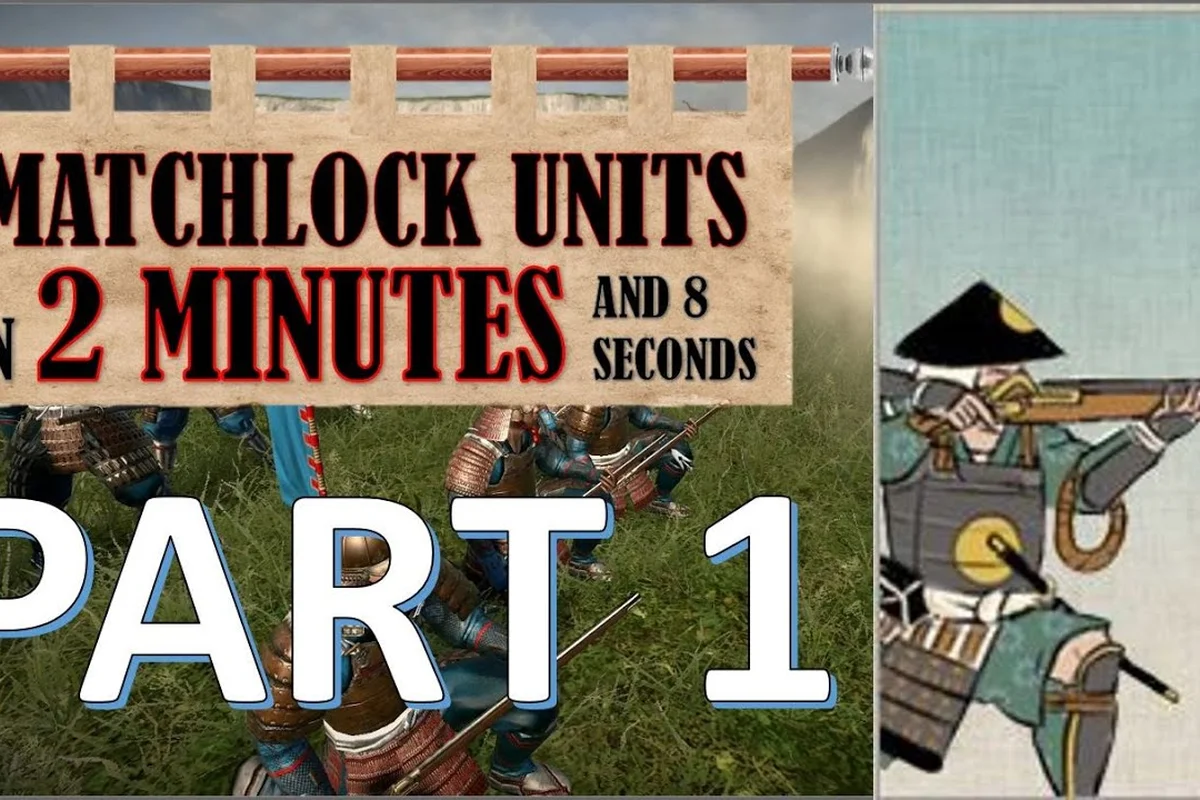
The Shogun 2 Portuguese tercos are the most distinctive foreign mercenaries in the game, blending European matchlock infantry with Sengoku-era Japan and giving clans a unit that fires after the first volley regardless of stance. They cost more than ashigaru, arrive late in a typical campaign because of research requirements, and excel in two narrow lanes: static castle-wall sieges and tight naval boarding actions. If you are building a roster that leans on gunpowder, this unit changes how your army handles choke points and how your fleet handles close engagements.
What the Portuguese Tercos Actually Are
The Portuguese Tercos are a Western-style matchlock infantry unit drawn from the small but real European trading-post presence in sixteenth-century Japan. Mechanically, they are an infantry unit that carries matchlock arquebuses instead of yari, katana, or naginata, and they are treated as foreign mercenaries rather than as a core clan unit on the standard unit roster. Community testing across the wider Shogun 2 unit roster confirms that they are one of very few non-ashigaru, non-samurai ranged options available in the base campaign, which makes them a meaningful roster choice rather than a flavour pick.
Their headline trait is the Matchlock weapon, which forces a pause between the first shot and every follow-up shot. Unlike yumi ashigaru or bow samurai, they cannot sustain a continuous rain of arrows, so positioning matters far more than with traditional archers. The first volley is devastating against tightly packed defenders on a castle wall, and subsequent volleys are strong against charging cavalry, but any unit that reaches them in melee will cut through the line because the tercos have no native melee weapon of consequence. Treat them as a force multiplier, not a frontline.
The unit slots into a roster that already includes several gunpowder options. The Total War Shogun 2 units overview covers how the tercos compare to the rest of the foreign and native roster, but in practical terms the tercos sit between the cheaper Teppo Ashigaru and the heavier Matchlock Samurai on both cost and performance. The teppo variant is roughly a third cheaper to recruit and maintain, while the samurai matchlocks cost more but gain better morale and melee defence, so the tercos occupy a clear mid-tier niche.
How to Unlock and Recruit the Tercos
Recruitment flows through two gates: a research prerequisite and a building prerequisite, both of which reflect the historical pattern that European military technology entered Japan through limited, controlled contact at trading ports like Nagasaki. You cannot queue the unit in your first castle town simply because the building is technically available — the research tree decides when the unit enters your recruitment pool.
| Prerequisite | Type | Effect |
|---|---|---|
| Matchlock firearms (art of war) | Research | Unlocks all matchlock units, including tercos and matchlock samurai |
| Nanban trade port | Building | Required recruitment building in coastal provinces |
| Foreign trade contact | Diplomacy | Optional but accelerates matchlock research in early turns |
| Christian converts (province) | Province modifier | Improves matchlock unit quality and reduces recruitment cost |
The Nanban trade port is the more important of the two building requirements because it is the only structure that actually trains the tercos, and it must sit on a coastal province to function. According to the a The Viking General Shogun 2 video, the base campaign expects you to expand toward trade-friendly coastal terrain if you want to bring European units into the field, so a southern or western Japan start helps considerably. Clans that begin inland, like Takeda, face a longer runway before they can field the unit at all.
Turn count matters in practice. A typical Owari or Shimazu opening lets you reach the matchlock art of war in roughly twenty to thirty turns with a focused research path, which is much faster than clans that begin with weaker economic starts. The exact turn count depends on how aggressively you rush the tech, because the Matchlock firearms art sits near the bottom of the gunpowder branch, not the top. The general siege and naval arts research path is a useful reference for sequencing your tree, since several of the same arts feed both European guns and your larger siege train.
Recruitment cost is steep at roughly 1,100 to 1,300 koku per ten men depending on province modifiers, which is why a second recruitment building, such as a more advanced coastal town, can help you keep two or three mercenary cards rotating through the training queue. You will not replace a full ashigaru block with tercos, and you should not try. A more sustainable approach is to keep one or two cards available and reinforce with cheaper ashigaru whenever casualties mount.
Combat Profile: Stats, Stances, and Matchlocks
The tercos are best understood through their stat block, because the Matchlock weapon trait changes how every other stat actually plays out in a real fight. The numbers below are drawn from community testing on the standard unit roster; small differences may appear by patch and by clan, but the overall shape of the unit has been stable since 2011.
| Attribute | Approximate Value | Comparison Versus Yumi Ashigaru |
|---|---|---|
| Melee attack | 4 | Lower — yumi ashigaru match it |
| Melee defence | 4 | Lower — yumi ashigaru are slightly higher |
| Range attack | 22 | Higher than yumi ashigaru at range 120 |
| Range defence | 8 | Comparable |
| Ammunition | 12 | Lower than yumi ashigaru's 22 |
| Melee damage | 18 | Lower than ashigaru's 28 |
| Charge bonus | 5 | Lower than cavalry, but present |
| Morale | 6 | Slightly higher than yumi ashigaru |
| Cost per card | 1,100–1,300 koku | Roughly 30 % more than yumi ashigaru |
The standout number is range attack 22 at range 120, which is the highest base ranged damage per volley of any standard infantry matchlock unit outside of the elite samurai matchlocks. That number is what makes the tercos feel like a glass cannon: one good opening volley will delete a chunk of any wall defender, but a sustained exchange will run them dry long before a yumi ashigaru runs out of arrows. Treat the first volley as your real damage and everything else as a bonus.
Matchlock Stance and the Volley Window
The Matchlock trait forces the unit to spend several seconds reloading after every shot, regardless of stance. There is no stance in which the tercos fire continuously, and there is no stance in which they fire faster; the only choice is whether they stand still to fire (the default stance), kneel for a small accuracy boost with reduced movement, or march to reposition before the next volley. Players who treat the matchlock like a bow will be disappointed, and players who treat it like an arquebus line in a Europa Universalis battle will be right at home.
The practical consequence is that a single card of tercos will fire three to four volleys in a typical two-minute engagement, and each volley needs roughly ten seconds of repositioning. That timing means the position of the unit matters more than the unit itself: place them on high ground, behind a yari screen, or on a castle wall where the angle of fire is fixed and the enemy must walk into the volley. Avoid open field battles where the enemy can close the gap faster than you can fire a second time, because the tercos will be overrun before they reload.
Morale, Armour, and Melee Survival
Tercos have no native melee defence to speak of, and their armour value is light by design. They will rout under a serious cavalry charge, will crumble if flanked by katana samurai, and will simply die if left unsupported against a determined assault. The recommended protection is a screen of Yari Ashigaru or, if you can afford them, Yari Samurai holding the line while the tercos fire from behind. The ashigaru screen does not need to win the melee — it only needs to hold for the three or four seconds between volleys, which is enough time for a well-placed matchlock volley to break the charge morale of an attacking unit.
The morale value of 6 is higher than most ashigaru, which is a real advantage. Tercos will hold formation under missile fire better than a yumi ashigaru line, which is why they are useful in defensive castle-wall sieges where the enemy is throwing arrows down at you for several minutes. Their morale is still lower than matchlock samurai, and it is far lower than no-dachi samurai, so do not expect them to anchor a battle line on their own. The unit is a finisher, not a corner stone, and the katana and yari samurai unit breakdown covers the better melee anchors to pair with them.
Where the Tercos Actually Excel
The tercos are not a general-purpose unit, and they will feel underwhelming in engagements that are not built around their strengths. Identifying those engagements, and then forcing them, is the real skill of running the unit. There are three concrete scenarios in which the tercos punch above their weight, and a fourth in which they are passable.
Castle-Wall Sieges as the Defender
A defending matchlock unit on a castle wall is one of the most efficient uses of the tercos, because the wall geometry forces attackers to climb into a narrow arc and the defenders fire down at maximum range. The first volley at the base of the ladder will usually kill or rout a third of the climbing unit, and a second volley as the survivors crest the wall finishes the job. Three or four cards of tercos deployed along the wall, with one or two cards of yari ashigaru at the gate and a small cavalry reserve, can hold a Tier 3 castle against a numerically superior attacker if you manage ammunition and choke points well.
| Wall Position | Recommended Unit Count | Reasoning |
|---|---|---|
| Main gate | 1 card yari ashigaru | Holds the breach against concentrated assault |
| Two front towers | 2 cards tercos | Overlapping fire on the ladder approach |
| Rear wall | 1 card yumi ashigaru | Cheaper rear-guard while you rotate tercos |
| Castle town | 1 card no-dachi samurai | Last line if the wall falls |
The numbers above assume a Tier 3 or higher castle; a Tier 1 or Tier 2 castle has narrower walls and fewer firing positions, which compresses your tercos into one or two useful arcs. The general castle defence tactics guide covers how to position the broader army, but the tercos specifically want the wide flat walls of an upgraded castle so that they can be redeployed along the wall as the attacker changes axis of attack.
Castle Sieges as the Attacker
The tercos are usable in offensive castle sieges if you bring siege equipment, but they are not the primary damage source. The classic siege train — mangonels, European cannons, and the larger great cannons — does the structural damage, and the tercos provide supporting fire to clear the wall before the assault. A single card of tercos placed on a hill overlooking the wall can suppress a wall defender while your mangonels reload, which speeds up the wall collapse.
The relationship between the tercos and the mangonel is a real synergy rather than a coincidence. Mangonels are slow, inaccurate, and devastating when they land, but they are vulnerable to cavalry counterattack, so a screen of ashigaru plus a card of tercos behind them is a standard pattern for both defending the artillery and finishing the survivors after a hit. The same applies to the European cannon, which has higher accuracy and longer range than the mangonel but is even more expensive, so a tercos screen is a cheaper fallback if your cannon is overrun.
Naval Battles and Coastal Engagements
The bow kobaya and the medium bune are the two main Shogun 2 naval units that the tercos are most often paired with in coastal or amphibious operations, because both are small enough to enter river mouths and lake inlets where larger ships would run aground. The bow kobaya is the lighter of the two and relies on its bow-mounted large-calibre cannon to start fires, while the medium bune is a more balanced boarding ship with both forward guns and a samurai boarding party. Neither ship is a serious match for a heavy warship on open water, so a common tactic is to lure the larger enemy ship into a shallow bay where your kobaya and medium bune can fire at close range while a card of disembarked tercos fires from the shore.
The boarding dynamic is where the tercos again matter. If the enemy ship makes contact and you trigger a boarding, the tercos disembark onto the deck and fire their first volley at point-blank range into the enemy crew, which usually breaks morale and ends the boarding in under a minute. Without the tercos, the same fight becomes a katana-versus-katana brawl that depends on which crew has higher melee stats, and against elite crews you will lose that fight more often than not.
Open Field Battles as a Passable Choice
In open field battles the tercos are passable but not strong, because the enemy can choose the angle of attack and you cannot lock them into a narrow arc. They still fire one devastating first volley, which is enough to break a single yari ashigaru charge, but the second and third volleys will be under heavier pressure and the unit will run out of ammunition at the worst moment. A typical competitive army build uses one card of tercos behind a yari wall in open field battles, where they function as a long-range finisher, and shifts the bulk of the firepower to Teppo Ashigaru or Yumi Ashigaru for the sustained exchange. The o ataka bune and cannon bune unit comparison is a good reference for how a single heavy unit can anchor a roster without dominating it, and the tercos fill the same role on land.
Army Builds and Tactical Pairings
A reasonable rosters for a tercos-focused campaign runs three to four cards of matchlock units as a single firing line, supported by a yari wall, a small cavalry reserve, and a couple of specialist units. The exact mix depends on the clan and on the campaign phase, but the broad shape is consistent across the community-tested rosters that show up in tier-list and army-composition videos.
Roster Skeleton for a Tercos-Anchored Army
-
2 cards Yari Ashigaru — frontline screen, cheap, expendable
-
2 cards Portuguese Tercos — primary damage dealer, positioned behind the yari line
-
1 card Yumi Ashigaru — flexible flanking or rear support, fills the volley cadence gap
-
1 card No-Dachi Samurai — melee anchor, absorbs cavalry charges
-
1 card General's Bodyguard — bodyguard unit, slightly better stats than the line infantry
-
1 card Yari Cavalry — fast reserve to exploit breaks in the enemy line
This roster assumes a mid-to-late campaign when you can afford to mix samurai with ashigaru, and it gives you two layers of ranged fire: the tercos for the heavy first volleys, and the yumi ashigaru for sustained suppression while the tercos reload. The no-dachi samurai and the yari cavalry together cost more than the rest of the army, but they buy you the room to fire three or four more volleys before the line collapses.
Common Mistakes When Building Around Tercos
The single most common mistake is using tercos as a frontline. Their low melee defence and low morale mean they will be crushed in any sustained melee, and the cost of replacing them is high enough that losing a card in the first thirty seconds of a battle can wreck your economy. The second most common mistake is over-stacking the roster with matchlock units and starving the army of yari defence; three or four cards of tercos is the practical ceiling because any more and you run out of bodies to screen them. The third mistake is deploying them in a forested province, where the trees break line of sight and force the unit to march into a tree line before it can fire; the open terrain of a coastal province, or the flat ground outside a castle, is the right deployment for this unit.
A subtle mistake that the community calls out is mismatched volley cadence. Matchlock units take longer to reload than yumi ashigaru, and a player who orders both to fire at the same time ends up with a continuous volley from the yumi and an awkward gap from the tercos. The fix is to order the yumi to fire first, then immediately order the tercos to fire, which staggers the volleys and produces a more continuous suppression effect. This is a small micro trick, but it adds up across a long battle, especially in a multiplayer match where the enemy is counting the seconds between your volleys to time a charge.
Pairing the Tercos With Siege Equipment
Pairing the tercos with European cannon and mangonel siege equipment produces a strong combined-arms force for the late-campaign siege battles. The mangonel draws the enemy's attention because of its structural damage, and the tercos pick off the enemy units that try to sally out and attack the artillery. The European cannon is a more accurate alternative, and against a Tier 4 or Tier 5 castle it can sometimes crack the wall on its own, after which the tercos are useful for clearing the breach from a distance while your yari ashigaru climb the rubble.
| Siege Unit | Role in a Tercos Army | When to Build |
|---|---|---|
| Mangonel | Primary wall damage, draws sallies | Mid-campaign, replaces onager |
| European cannon | Accurate long-range wall damage, slow | Late-campaign, expensive but reliable |
| Great cannon | Maximum damage, very slow | Optional, mainly in siege-heavy campaigns |
The relationship between the tercos and the European cannon is the cleanest combined-arms pairing in the late campaign, because both rely on a clear line of sight and both punish an enemy that tries to advance through open ground. A typical offensive siege uses one or two European cannons, two or three cards of tercos on a flanking hill, and a yari wall in reserve for the final assault. The arts research path for siege and naval unlocks covers the research tree behind these units, and it is worth sequencing your arts so that the cannon and the tercos unlock in the same window.
Frequently Asked Questions
Are the Portuguese tercos worth recruiting over teppo ashigaru?
Yes, if you can afford the extra cost and you are fighting in sieges or defensive chokepoints, because the first volley damage of the tercos is meaningfully higher than the teppo variant. In open field battles the difference is smaller and the cost may not be worth it. For most campaigns, a single card of tercos backed by two cards of teppo ashigaru is the most cost-efficient build.
Do the Portuguese tercos need a research art to unlock?
Yes, you need the Matchlock firearms art of war, which sits near the bottom of the gunpowder branch. It typically arrives in turn twenty to thirty of a focused campaign and unlocks every matchlock unit in the game, including the matchlock samurai. Plan your early research toward this art if the tercos are a priority for your roster.
Can the Portuguese tercos win a melee fight against ashigaru?
Rarely, because their melee attack and defence are both lower than a yari ashigaru's and they have no native yari or katana. They will lose to most melee engagements, especially against katana samurai or no-dachi samurai, so always keep them behind a screen. The right way to use the tercos in a melee is to fire a final volley as the enemy closes, then route them out rather than commit.
Do the Portuguese tercos work in naval battles?
Yes, they are a strong disembarked unit for bow kobaya and medium bune boarding actions, because their first volley at point-blank range is often enough to break the enemy crew's morale. Combined with the Shogun 2 naval units roster, they give you a coastal raiding force that can threaten trade routes and contested ports. Open-water engagements against heavy ships are still risky because the kobaya and medium bune lack the hull strength to trade cannon fire.
Which clans use the Portuguese tercos best?
Clans with a coastal capital and a focus on trade, such as Shimazu and Chosokabe, reach the Nanban trade port and the matchlock arts faster than inland clans. Takeda, Oda, and other inland starts can still recruit the tercos but need to capture a coastal province first, which adds several turns to the research and recruitment pipeline. The choice depends on whether you want the tercos early or whether you are happy to wait for a late-campaign gunpowder roster.